Botanical Insights & Scientific Trends
In-depth articles, technological advances, and market analyses in the global natural ingredients sector.
Nutraceutical & Spice Innovation
Discover analytical techniques, extraction purity standards, and formulation solutions for B2B global markets.
Plant-Based Bioactive Science
Updates on active botanical research, quality assurance compliance, and global sourcing strategies.
10 Best Active Botanical Ingredients for Global Buyers
Table of Contents
- Define Active Botanicals and Apply ISO 16128-2:2017 Origin Indices
- Screen 10 Actives by Plant Part, Marker Compound, and Evidence Level
- Compare Aloe, Centella, Green Tea, Bakuchiol, and Licorice for Skin Care
- Assess Turmeric, Ginseng, Rosemary, Chamomile, and Jojoba for Formulation
- Verify Manufacturing Readiness Against ISO 22716:2007 Cosmetic GMP
- FAQS
- Conclusion
- Related Posts
Active Botanical Ingredients are attracting global buyers who want recognizable plant-based components, dependable supply, and clear product documentation. Yet “best” rarely means the same thing across every market or application. A botanical valued for its aroma may not suit a fragrance-free formula. A popular extract may also vary with plant species, growing conditions, and processing methods.
This guide introduces ten widely considered options, including ingredients such as aloe vera, green tea, turmeric, and centella asiatica. Each has distinct characteristics, and research or supplier claims should be assessed in context. Buyers can compare the botanical name, plant part, extraction method, and standardization details. They should also review batch-specific certificates of analysis and available testing for identity, contaminants, and stability. Details matter.
Sourcing deserves equal attention. Ask where the crop was grown, how traceability is maintained, and whether supply can remain consistent between seasons. Small differences can affect color, odor, texture, and performance in a finished product. This is where selection gets less tidy: a well-documented ingredient may still prove unsuitable after formulation trials. No single list can replace those trials. The right choice depends on the intended use, target market, technical requirements, and evidence available for the specific material. Read the profiles as a practical starting point, not a universal ranking.
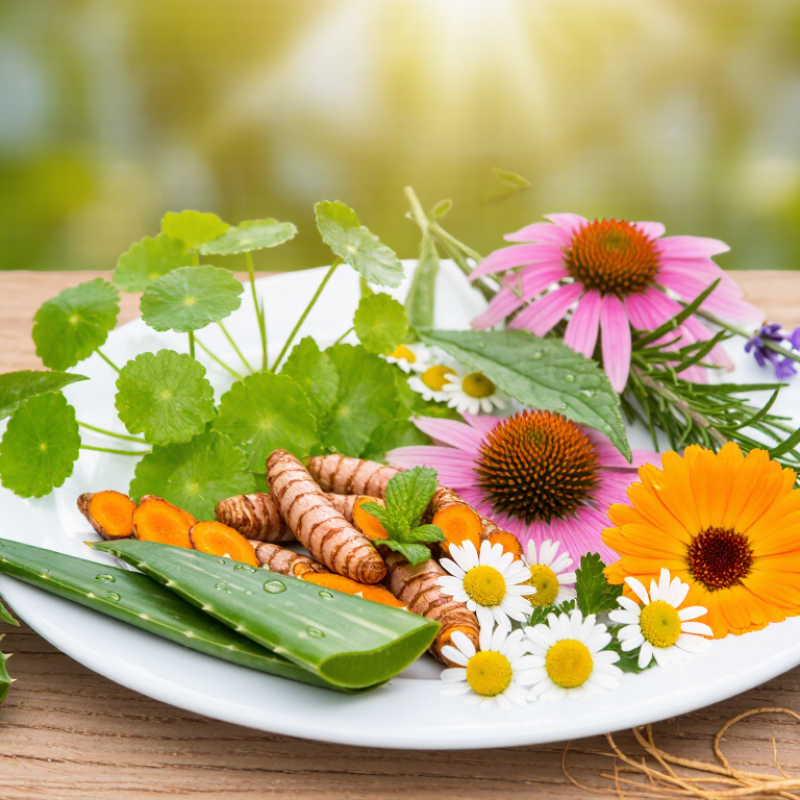
Define Active Botanicals and Apply ISO 16128-2:2017 Origin Indices
10 Best Active Botanical Ingredients for Global Buyers
Define Active Botanicals and Apply ISO 16128-2:2017 Origin Indices
Active botanicals are plant-derived ingredients selected for a defined cosmetic function, such as soothing or antioxidant support. “Active” describes their intended role, not proof of clinical performance.
ISO 16128-2:2017 provides a framework for calculating natural, natural-origin, organic, and organic-origin indices for cosmetic ingredients. The indices run from 0 to 1. They describe composition, not efficacy, sustainability, or safety. Keep those claims separate.
For buyers comparing extracts, request the ingredient’s documented calculation basis, including source materials and processing inputs. A high natural-origin index is not a shortcut to understanding the whole supply chain. It may say little about farming practices or the energy used in extraction.
Details matter. A pale powder and a dark, aromatic extract can both qualify as botanical ingredients, yet differ greatly in composition and handling needs.
Market interest is substantial: Grand View Research estimated the global botanical extracts market at about USD 6.9 billion in 2023, with projected growth through 2030. Market estimates vary by scope, so treat them as context, not a purchasing forecast.
For practical screening, pair the ISO index with supplier records, specification data, and evidence supporting each proposed cosmetic benefit. The paperwork can be imperfect; flag gaps and ask how the figure was calculated.
Screen 10 Actives by Plant Part, Marker Compound, and Evidence Level
10 Best Active Botanical Ingredients for Global Buyers
Screen 10 Actives by Plant Part, Marker Compound, and Evidence Level
A useful screen starts with identity, not a flashy claim. Turmeric rhizome is commonly assessed for curcuminoids; human evidence is growing, but formulation affects absorption. Ginger rhizome contains gingerols, with human studies supporting some uses. Green tea leaves provide catechins, including EGCG; results depend on dose and preparation. Milk thistle seeds are standardized around silymarin, though clinical findings remain mixed. Peppermint leaves contain menthol and menthone; evidence is stronger for specific preparations than for plain leaf powder.
Boswellia resin is assessed for boswellic acids, with some clinical research, but study quality varies. Ashwagandha roots contain withanolides; some trials report benefits, yet safety and medication interactions need review. Grape seeds supply proanthocyanidins, with human evidence varying by outcome. Rosemary leaves contain carnosic acid and carnosol, supported mainly by laboratory and food-use research. Chamomile flowers provide flavonoids such as apigenin; clinical evidence is limited. Plant part matters. So does extraction.
Tips: Request a botanical name, plant part, marker range, extraction details, and test methods. Check whether evidence concerns the same preparation you plan to buy. A marker verifies composition, not efficacy. I would not rank these ingredients by popularity alone; evidence gaps are easy to overlook, and supplier documents deserve independent review.
Compare Aloe, Centella, Green Tea, Bakuchiol, and Licorice for Skin Care
Aloe is often selected for lightweight hydration and a fresh, cooling feel. Its performance depends on the extract, not just the plant name. Buyers should check the plant part, processing method, and solids content. A clear gel can still vary between batches.
Centella asiatica is valued in formulas designed for sensitive-feeling skin. Ask suppliers for details on its key triterpenes and extraction solvent. Green tea brings polyphenols, including catechins, but these can be sensitive to heat, oxygen, and light. Packaging and formulation conditions matter. Small details matter.
Bakuchiol is used in products targeting the look of uneven texture and fine lines. It is not identical to retinoids, and evidence for finished products can differ by formula. Licorice extracts may help improve the appearance of uneven skin tone, though results depend on extract composition. Compare active-marker data, solubility, odor, color, and stability testing before choosing. A sample batch is useful, but it cannot replace repeat testing. Buyers should also review safety documentation and recommended use levels for the intended product type. Claims need restraint; plant origin alone does not prove gentleness or effectiveness.
Assess Turmeric, Ginseng, Rosemary, Chamomile, and Jojoba for Formulation
Turmeric, ginseng, rosemary, chamomile, and jojoba offer different formulation roles, so compare more than their botanical names. Turmeric extracts may add a strong yellow tone and earthy scent; curcuminoid content and dispersion can vary by grade. Ginseng is commonly selected for water-based products, but its extract profile depends on species and processing. Request the plant part, extraction method, and a recent certificate of analysis before comparing samples.
Rosemary extracts are not interchangeable: some are used for antioxidant support in oil phases, while aromatic extracts bring a distinct herbal note. Chamomile ingredients may be oil- or water-soluble, with color and scent shifting between batches. Jojoba is a liquid wax, not a conventional triglyceride oil, and can contribute a lightweight, conditioning feel. Still, ingredient names alone do not predict performance. A supplier sheet rarely tells the whole story; small bench trials can reveal stability or sensory issues that paperwork misses.
Tips: Test each ingredient at the intended use level, then check color, odor, solubility, and texture over time. Keep a retained sample for comparison. Ask for traceability and contaminant testing suited to the material and market. Some details are easy to overlook, especially when a sample looks perfect on day one.
10 Best Active Botanical Ingredients for Global Buyers — Assess Turmeric, Ginseng, Rosemary, Chamomile, and Jojoba for Formulation
| Botanical Ingredient | Key Constituents | Common Formulation Role | Typical Formulation Fit | Buyer and Formulation Considerations |
|---|---|---|---|---|
| Turmeric Curcuma longa |
Curcuminoids; volatile oil constituents vary by extract | Antioxidant and skin-conditioning ingredient | Oil-based products, emulsions, or dispersions using a suitable extract | Curcuminoids have low water solubility and can impart a strong yellow color. Confirm extract type, dispersion method, and color impact in the finished formula. |
| Ginseng Panax species |
Ginsenosides and other saponins | Skin-conditioning ingredient in personal-care products | Water-based extracts are often suited to aqueous phases; solvent and carrier depend on the supplied extract | Specify the species, plant part, extraction solvent, and ginsenoside assay where relevant. Extract composition can vary with these factors. |
| Rosemary Salvia rosmarinus (syn. Rosmarinus officinalis) |
Rosmarinic acid in some extracts; carnosic acid and carnosol in certain oil-soluble extracts | Antioxidant support or fragrance, depending on extract type | Oil-soluble extracts can suit lipid phases; other extracts may be designed for aqueous systems | Do not treat all rosemary extracts as interchangeable. Confirm the active profile, carrier, intended use, and fragrance contribution. |
| Chamomile Matricaria recutita or Chamaemelum nobile |
Composition depends on species and extract; may include apigenin-related compounds or bisabolol | Skin-conditioning ingredient; some preparations also contribute fragrance | Extract solvent and carrier determine compatibility with water- or oil-based formulas | Identify the chamomile species and extraction method. Consider sensitivity to Asteraceae-family plants and check applicable fragrance-allergen requirements. |
| Jojoba Simmondsia chinensis |
Liquid wax esters, predominantly long-chain wax esters | Emollient and skin-conditioning oil-phase ingredient | Oil phases, anhydrous products, and emulsions | Jojoba is a liquid wax rather than a conventional triglyceride oil. Confirm grade, refining level, sensory profile, and compatibility with the chosen emulsifier. |
| Green Tea Camellia sinensis |
Catechins, including epigallocatechin gallate (EGCG), in extracts that retain them | Antioxidant and skin-conditioning ingredient | Usually supplied as an aqueous or hydro-glycolic extract; solubility depends on the product | Catechin content can be affected by processing, light, oxygen, and pH. Review the supplier's specification and assess finished-product color and stability. |
| Licorice Glycyrrhiza glabra |
Glycyrrhizin and flavonoids; glabridin is associated with certain extracts | Skin-conditioning ingredient | Water compatibility varies: glycyrrhizin-rich and glabridin-rich extracts have different solubility profiles | Confirm which constituents are standardized and whether the extract is water-, glycol-, or oil-compatible before selecting a phase. |
| Aloe Aloe vera |
Polysaccharides, including acemannan in some materials | Humectant and skin-conditioning ingredient | Water-based gels, lotions, and other aqueous formulations | Check whether the ingredient is juice, powder, or concentrated extract, and account for its carrier and dilution. A suitable preservation system is important in water-containing formulas. |
| Calendula Calendula officinalis |
Flavonoids and triterpenoids; profile varies with plant part and extraction method | Skin-conditioning ingredient | Oil macerates suit oil phases; other extracts may be supplied for aqueous or hydro-glycolic use | Request the plant part, extraction solvent, carrier, and compositional specification. Do not assume an oil macerate has the same profile as a solvent extract. |
| Gotu Kola Centella asiatica |
Triterpenoid compounds, including asiaticoside and madecassoside in some extracts | Skin-conditioning ingredient | Available in different extract forms; phase compatibility depends on solvent and carrier | Confirm the extract's triterpenoid specification, solvent system, and recommended use conditions. Test stability and compatibility in the complete formula. |
Formulation note: Ingredient composition and solubility vary by species, plant part, extraction process, and supplier grade. Verify current technical documentation, regulatory status, safety information, and finished-product stability for each target market.
Verify Manufacturing Readiness Against ISO 22716:2007 Cosmetic GMP
Selecting active botanical ingredients for global markets takes more than comparing plant names and extraction claims. Buyers should check whether a supplier’s manufacturing controls align with ISO 22716:2007, the cosmetic GMP guideline for production, control, storage, and shipment. Ask for documented batch records, ingredient traceability, cleaning procedures, and staff training records. Small details matter. A clearly labeled retain sample, for example, can help investigators compare a questioned lot with the original batch.
Review how the facility handles incoming plant material, from identity checks to storage conditions. Heat, moisture, and light can affect botanical materials, so request the supplier’s monitoring limits and excursion procedures. Check whether specifications cover relevant quality attributes, such as appearance, odor, and microbial limits, where appropriate. ISO 22716 alignment does not by itself prove an ingredient’s efficacy, purity, or suitability for every product. Buyers still need risk-based testing and market-specific review.
Walk through change control, complaint handling, and subcontractor oversight. Do revised extraction parameters trigger a new review? Can the supplier trace a lot back to its source and processing records? Documents may look complete while practices vary between shifts. That deserves a closer look. A focused site assessment can reveal gaps that a polished questionnaire misses, and follow-up actions should have owners and realistic deadlines.
FAQS
They are plant-derived ingredients chosen for a defined cosmetic role, such as soothing or antioxidant support. “Active” describes intent, not proven clinical performance.
It describes an ingredient’s natural or organic origin composition on a scale from 0 to 1. It does not measure efficacy, safety, or sustainability.
Ask for its calculation basis, source materials, processing inputs, specification data, and test methods. Details matter.
No. It may reveal little about farming practices or extraction energy. I might be tempted to treat one number as enough, but that would miss important gaps.
Turmeric rhizome is assessed for curcuminoids; green tea leaves for catechins, including EGCG. Milk thistle seeds are often standardized around silymarin.
No. A marker helps verify composition, not efficacy. Evidence should match the specific preparation being considered.
Plant part and extraction can affect an ingredient’s composition and handling needs. A pale powder and a dark, aromatic extract may differ greatly.
Study quality and findings vary by ingredient and outcome. For example, chamomile evidence is limited, while some ashwagandha trials report benefits. Safety and medication interactions also need review.
No. Market estimates provide context, and their scope can vary. Supplier records and evidence are more useful for screening a specific ingredient.
Conclusion
This guide helps global buyers evaluate Active Botanical Ingredients through a practical, evidence-aware framework. It explains how to describe botanical origin using the indices in ISO 16128-2:2017 and how to screen ten ingredients by plant part, characteristic marker compounds, and strength of available evidence. Rather than treating all botanicals as equivalent, it considers the role of sourcing, processing, and standardized documentation in assessing their suitability for cosmetic formulations.
For skin care, the guide compares aloe, Centella, green tea, bakuchiol, and licorice, then reviews turmeric, ginseng, rosemary, chamomile, and jojoba from a formulation perspective. Buyers can use these comparisons to consider ingredient functions, formulation compatibility, and supporting evidence before selecting materials. The final section outlines how to assess manufacturing readiness and quality practices against ISO 22716:2007 cosmetic GMP, helping procurement teams ask informed questions and make more consistent supplier evaluations.

Blog Tags: