Botanical Insights & Scientific Trends
In-depth articles, technological advances, and market analyses in the global natural ingredients sector.
Nutraceutical & Spice Innovation
Discover analytical techniques, extraction purity standards, and formulation solutions for B2B global markets.
Plant-Based Bioactive Science
Updates on active botanical research, quality assurance compliance, and global sourcing strategies.
Best Plant Based Bioactive Ingredients for 2026?
Table of Contents
- What Plant-Based Bioactive Ingredients Are and How They Work
- Key Ingredient Groups and Their Primary Benefits in 2026
- How to Assess Safety, Evidence, Quality, and Sustainability
- Comparing Leading Ingredients for Different Health Goals
- Emerging Formulation and Regulatory Trends for 2026
- FAQS
- Conclusion
- Related Posts
As 2026 approaches, interest in Plant Based Bioactive Ingredients is moving beyond fashionable labels. Buyers want to know what an ingredient contains, how consistently it is produced, and whether research supports its intended use. Physician-scientist Dr. William Li framed a related question in his TED talk title: “Can we eat to starve cancer?” It is a memorable question, not proof that any single food or compound prevents disease.
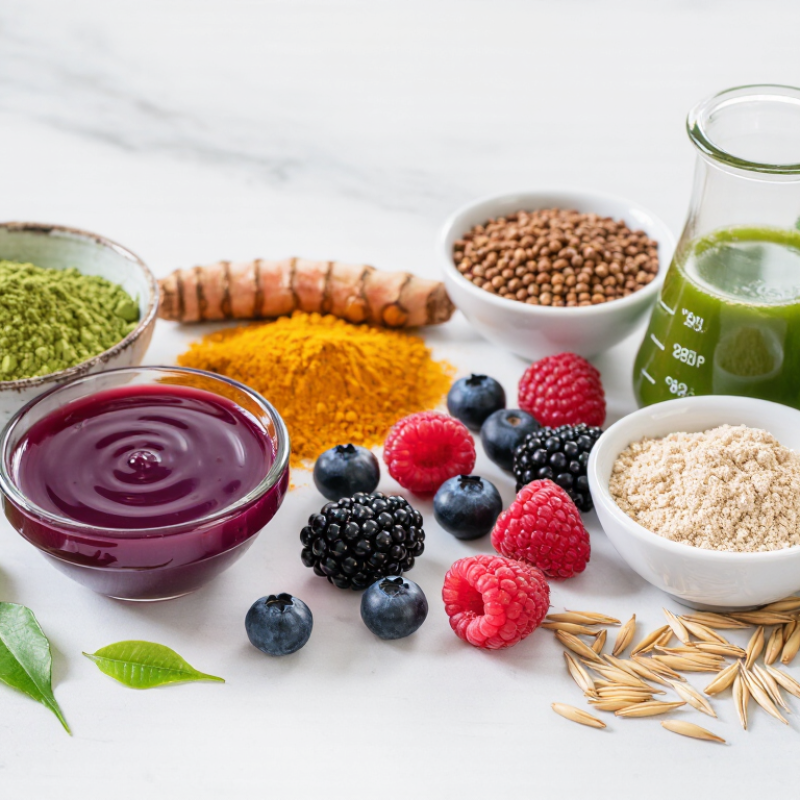
A useful starting point. This guide examines ingredients such as berry anthocyanins, green-tea catechins, turmeric curcuminoids, broccoli-derived sulforaphane, and oat beta-glucans. Their evidence differs. A bright-purple berry extract may have a standardized polyphenol profile, while another product may offer little detail about its source or testing. Those distinctions matter. We will consider human research, ingredient identity, processing, dose, and practical applications, while separating promising findings from established benefits. Safety and quality deserve equal attention; “natural” does not automatically mean suitable for everyone. And the evidence is uneven. Some studies are small, use different preparations, or measure outcomes that do not translate neatly into everyday health. This overview is not a ranking or medical advice. It is a careful look at which plant-derived bioactives may merit attention in 2026—and what buyers should verify before believing the label.
What Plant-Based Bioactive Ingredients Are and How They Work
Plant-based bioactive ingredients are compounds in foods and herbs that can influence biological processes. They include polyphenols in berries, carotenoids in orange vegetables, and glucosinolates in cruciferous vegetables. They are not the same as essential nutrients such as protein or vitamin C. Their effects depend on the compound, dose, preparation, and person.
Some bioactives interact with enzymes, cell signals, or the body’s antioxidant defenses. For example, chopping broccoli starts reactions that convert glucosinolates into other compounds. Heat can change those reactions. A cup of lightly cooked broccoli is not chemically identical to a raw one. Small details matter.
The body also absorbs these compounds unevenly. Fat can help the uptake of certain carotenoids, while gut microbes may transform some polyphenols. That sounds neat. It is also variable. Research findings from cells or animals do not automatically predict benefits in people, and “natural” does not guarantee safety or effectiveness. When evaluating an ingredient, look for human studies, clear amounts, and evidence tied to a specific use. One uncertainty remains: food combinations and individual digestion can make the same ingredient behave differently.
Key Ingredient Groups and Their Primary Benefits in 2026
Best Plant Based Bioactive Ingredients for 2026?
Key Ingredient Groups and Their Primary Benefits in 2026
Plant-based bioactive ingredients are gaining attention in 2026, but the best choice depends on the intended benefit. Polyphenols in berries, tea, and cocoa are studied for their antioxidant activity and possible support for cardiovascular health. They are not medicines. Everyday foods are a sensible starting point: a bowl of blueberries offers polyphenols alongside fiber and water.
Carotenoids give carrots, tomatoes, and leafy greens their vivid colors. Lutein and zeaxanthin are associated with eye health, while lycopene is researched for its role in normal cell function. Color helps, but not always. Absorption can vary, and eating these foods with a little fat may help the body use some carotenoids.
Dietary fibers and prebiotics, found in oats, beans, and chicory root, can support regular digestion and feed certain beneficial gut microbes.
Plant sterols occur in nuts, seeds, and vegetable oils, and research suggests they can help lower LDL cholesterol when eaten in meaningful amounts. Individual results differ. Extracts may be more concentrated than foods, so dose and quality matter. Check ingredient labels, and ask a qualified health professional about possible interactions, especially when taking medication. The evidence is useful, but it is not always tidy; a promising ingredient does not guarantee a noticeable result.
How to Assess Safety, Evidence, Quality, and Sustainability
Plant-based bioactive ingredients deserve the same scrutiny as any active substance. Start with the exact species, plant part, extraction method, and daily dose. Safety depends on all four. Check for heavy metals, pesticide residues, microbes, and undeclared additives through batch-specific testing. Review possible medicine interactions, too; “natural” is not a safety finding. Human studies should match the ingredient’s form and dose, not merely cite research on a related plant. Evidence can be thinner than marketing suggests.
The American Botanical Council’s 2024 HerbalGram market report put 2023 U.S. herbal-supplement sales at $12.6 billion, up 4.4%. That signals demand, not proven benefit. For quality, look for identity testing, consistent marker compounds, and accessible certificates of analysis. For sustainability, ask where the crop was grown, whether it is cultivated or wild-harvested, and how harvest pressure is monitored. The FAO’s 2023 food-loss report estimated that 13.2% of food was lost after harvest and before retail; it is a broad benchmark, not a botanical-specific measure. Traceability still matters. Paper certifications alone may miss local labor or biodiversity risks, so supplier records and independent audits deserve a closer look.
Plant-Based Bioactive Ingredients: Evidence-Linked Daily Benchmarks
Selected daily intake levels associated with authorized cholesterol-related health claims—not a ranking of ingredient effectiveness.
Oat or barley beta-glucan: 3 g/day; plant sterols: 1.5 g/day; soluble fiber from psyllium: 7 g/day. These benchmarks come from different regulatory frameworks and are not directly comparable measures of potency. “Best” also depends on product identity, dose, human evidence, contaminant testing, manufacturing quality, and transparent sourcing and sustainability data. Individual needs and product directions vary.
Sources: EFSA Journal 2010;8(12):1885 (beta-glucans); EFSA Journal 2009;7(9):1175 (plant sterols); U.S. FDA regulation 21 CFR 101.81 (psyllium).
Comparing Leading Ingredients for Different Health Goals
Best Plant Based Bioactive Ingredients for 2026?
The best choice depends on the health goal, not the trend. For cholesterol support, soluble psyllium and plant sterols have clearer human evidence than many fashionable extracts. A meta-analysis of 28 trials found that about 10 grams of psyllium daily lowered LDL cholesterol by roughly 0.33 mmol/L. EFSA assessments report that 2 grams of plant sterols daily can reduce LDL by around 7–10%. Small, measurable changes. People taking medication should discuss these ingredients with a qualified clinician.
For exercise, beetroot-derived nitrate may support blood flow and performance, though results vary with dose, training, and product composition. For weight management, green tea catechins appear less compelling; effects in research are generally modest. The NIH Office of Dietary Supplements also cautions that supplement evidence differs by ingredient and formulation. A familiar plant name does not guarantee a reliable result.
The Council for Responsible Nutrition’s 2024 Consumer Survey found that 75% of U.S. adults use supplements. Use is not proof of benefit. This comparison is imperfect: trial doses, extracts, and baseline diets differ, and real-world routines are messier. Check the studied dose and independent testing, not just the plant on the label. Ingredient quality can vary.
Emerging Formulation and Regulatory Trends for 2026
In 2026, plant-based bioactives are being judged by more than their origin. Formulators are looking closely at identity, consistency, and performance in finished products. Polyphenol-rich extracts, carotenoids, and plant fibers may suit different goals, but their usefulness depends on dose, processing, and the product matrix. A bright orange carotenoid powder, for example, can lose color when exposed to light or oxygen. Packaging and storage are part of the formulation, not afterthoughts. Details matter.
Regulatory expectations also shape ingredient choices. Requirements for ingredient status, labeling, and health claims vary by market and can change. Companies should verify the rules that apply where a product will be sold, rather than treating one market’s approval as universal. Clear records help: botanical identity, sourcing, extraction methods, contaminant testing, and evidence supporting any claim. Claims should match the strength and limits of the research. Not always easy. Studies may use different extracts, doses, or populations, making results hard to compare. A careful 2026 formulation pairs measurable quality controls with modest, accurate language—and leaves room to revise when better evidence or guidance emerges.
FAQS
They are compounds in foods and herbs that can influence biological processes. Examples include berry polyphenols, carrot carotenoids, and broccoli glucosinolates. They are not essential nutrients like protein or vitamin C.
Yes. Chopping broccoli starts reactions that can form new compounds, while heat may alter them. Raw and lightly cooked broccoli are not chemically identical. Small details matter.
It may help the body absorb some carotenoids. Try leafy greens with a little oil. Absorption still varies between people.
Berries, tea, and cocoa contain polyphenols. A bowl of blueberries also provides fiber and water. Foods are a sensible starting point.
Psyllium and plant sterols have human research behind them. About 10 grams of psyllium daily lowered LDL by roughly 0.33 mmol/L in one meta-analysis. Around 2 grams of plant sterols daily was associated with reductions of about 7–10%. Individual results differ.
No. These ingredients are not medicines, and their effects may be modest. Ask a qualified health professional before using them, especially if you take medication.
No. Research results depend on the dose, preparation, and person. Findings from cells or animals do not automatically predict human benefits. That part remains uncertain.
Look for human studies, a clearly stated amount, and evidence for a specific use. Check the ingredient label and quality testing. A familiar plant name alone tells you little.
Conclusion
Plant Based Bioactive Ingredients are naturally derived compounds that may support health by interacting with processes such as antioxidant defense, digestion, and normal inflammatory responses. In 2026, key groups include polyphenols, carotenoids, plant fibers, and botanical extracts, each associated with different potential benefits. The most suitable ingredient depends on the intended health goal, the strength of available evidence, and how well it fits into a balanced diet.
Choosing an ingredient also means assessing safety, dosage, product quality, and sustainability—not just its claimed benefits. Reliable evidence and clear sourcing can help distinguish promising options from those with limited support. Emerging formulation approaches are making plant-based compounds easier to incorporate into foods and supplements, while regulatory expectations continue to shape how products are developed and described. Overall, thoughtful evaluation can help consumers and formulators identify ingredients that are effective, responsible, and appropriate for their intended use.

Blog Tags: