Botanical Insights & Scientific Trends
In-depth articles, technological advances, and market analyses in the global natural ingredients sector.
Nutraceutical & Spice Innovation
Discover analytical techniques, extraction purity standards, and formulation solutions for B2B global markets.
Plant-Based Bioactive Science
Updates on active botanical research, quality assurance compliance, and global sourcing strategies.
7 Tips for Sourcing Natural Aroma Ingredients
Table of Contents
- Define Natural Aroma Ingredients with ISO 9235:2021
- Verify Botanical Names, Plant Parts, Origins, and Extraction Methods
- Assess Aroma Quality Through GC–MS Profiles and Batch Certificates
- Check Natural-Origin Claims Against ISO 16128-1:2016
- Qualify Suppliers Through Traceability, Sustainability, and Lot Testing
- FAQS
- Conclusion
- Related Posts
Natural Aroma Ingredients can bring a formula to life: a bright peel note, a leafy green accent, or the soft warmth of a resin. But sourcing well takes more than choosing a scent sample. Buyers need to understand where a material comes from, how it is produced, and whether its quality remains consistent across batches. A beautiful aroma is only part of the story.
Natural perfumer and author Mandy Aftel’s work offers a useful reminder: evaluating a natural material means paying attention to its character, origin, and transformation—not aroma alone. That perspective guides these seven sourcing tips. They cover supplier transparency, botanical identity, harvest and processing details, sensory evaluation, documentation, batch variation, and responsible supply relationships. Ask for specifics. A clear answer matters.
Some details are easy to overlook. A sample may smell vivid in a small vial, then fade in a finished product. A supplier’s description may sound reassuring, yet leave the plant part or extraction method unclear. That deserves a follow-up question. It is also worth admitting that natural materials vary; no checklist can make every harvest identical. The goal is not to erase variation, but to understand it and make informed choices. These practical steps help teams assess Natural Aroma Ingredients with greater care, clearer expectations, and better questions before committing to a source.
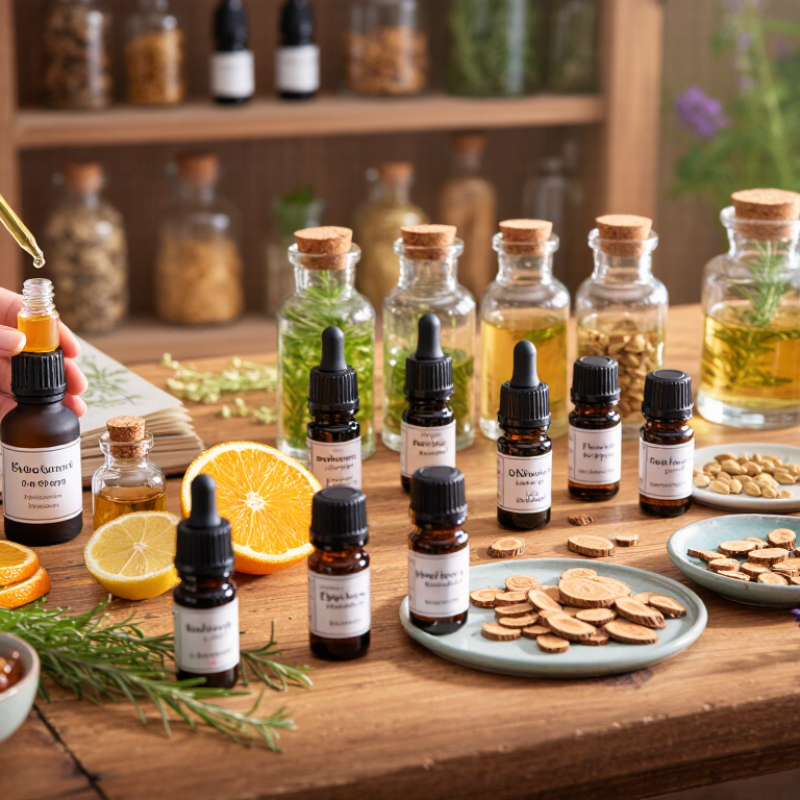
Define Natural Aroma Ingredients with ISO 9235:2021
ISO 9235:2021 defines natural aromatic raw materials by origin and processing: they come from plant, animal, or microbiological sources and are obtained through physical, enzymatic, or microbiological processes. It is a vocabulary standard, not a quality certificate. That distinction matters. A “natural” label alone does not confirm species, plant part, extraction method, or batch consistency. Ask suppliers for the botanical name, country of origin, processing method, and traceable batch documents. Check that the paperwork matches the material in the drum, not just a product description.
The detail is practical. A steam-distilled leaf oil and a solvent-extracted flower material may share a botanical source, yet they are not the same ingredient. CBI’s 2024 European market research reports roughly €1.5 billion in 2022 imports of essential oils, underscoring the scale of cross-border sourcing. Trade figures cannot prove authenticity, though. Request a certificate of analysis and relevant chromatographic data, then compare them with the declared material and its normal variation. Keep samples. Record storage conditions. The term “natural” still leaves room for interpretation, and even careful checks can miss a weak link in the supply chain.
Verify Botanical Names, Plant Parts, Origins, and Extraction Methods
Verify the Latin binomial, not just the common name. Similar names can refer to different species with different aroma profiles. Check accepted synonyms, the plant part, and the supplier’s lot documents. Leaf, flower, bark, and peel are not interchangeable. Name every detail. The ISO 9235 standard provides shared terminology for natural aromatic raw materials, helping buyers compare specifications consistently. Ask for the country and, where possible, the growing region, harvest year, and traceability records. “Origin: France” may describe processing rather than cultivation, so clarify what the field means.
Extraction method changes both aroma and composition. Steam-distilled leaves may smell different from solvent-extracted flowers; citrus peel is often cold-pressed. Request the method and a batch-specific certificate of analysis. A GC-MS profile can support identity checks, but it cannot, by itself, prove species, plant part, or origin. Compare it with a suitable reference and investigate unexpected peaks. Small paperwork gaps matter. Kew’s State of the World’s Plants 2016 report estimated that 21% of plant species were threatened with extinction. That figure is not specific to aroma crops, but it underlines why traceable, responsibly managed sourcing deserves scrutiny. Records can look complete and still leave questions; buyers should note uncertainties rather than treat a tidy certificate as proof.
Assess Aroma Quality Through GC–MS Profiles and Batch Certificates
7 Tips for Sourcing Natural Aroma Ingredients
Assess Aroma Quality Through GC–MS Profiles and Batch Certificates
A natural aroma’s description is only a starting point. Ask for a GC–MS profile tied to the exact batch, not a generic sample. The European Pharmacopoeia’s lavender-oil monograph sets linalool at 20–45% and linalyl acetate at 25–47%. These ranges help flag unusual profiles; they do not prove freshness or origin. ISO 11024-1 also treats chromatographic profiles as guidance for assessing essential oils.
Tip: Match the certificate’s batch number to the container. Check the botanical name, plant part, origin, extraction method, analysis date, and chromatogram. Look for named compounds and their reported proportions. Ask the supplier to explain any large shift from previous batches. Small details matter.
Interpret results cautiously. GC–MS can help identify volatile compounds, but peak-area percentages are not automatically absolute concentrations. Different labs, columns, and methods can produce results that are hard to compare. Request the method and, where possible, reference standards. The NIST/EPA/NIH Mass Spectral Library can support compound identification, but it does not certify ingredient quality. Smell the sample too: a sharp, flat, or unexpectedly sweet note deserves a question. No profile tells the whole story. A certificate can still leave gaps.
7 Tips for Sourcing Natural Aroma Ingredients - Assess Aroma Quality Through GC–MS Profiles and Batch Certificates
| Tip | What to assess | GC–MS profile evidence | Batch certificate checks | Practical sourcing action |
|---|---|---|---|---|
| 1. Confirm botanical identity | Verify the accepted botanical name, plant part, and declared origin. Common names alone can refer to different species or materials. | Check whether the reported volatile profile is consistent with the declared material. For example, lavender oils commonly contain linalool and linalyl acetate; clove bud oil commonly contains eugenol. | Look for botanical name, plant part, country or region of origin, lot number, and extraction method. | Request traceability documents and compare the supplier’s declaration with the batch-specific analytical report. |
| 2. Review the complete GC–MS report | Assess the chromatogram and compound table, not just a summary stating “passed.” Confirm that the report is linked to the offered lot. | Check identified compounds, relative peak percentages, retention data where provided, and any unidentified or atypical peaks. Sweet orange oil, for instance, is commonly limonene-rich. | Confirm the report date, sample or lot reference, analytical method, and laboratory details are present. | Ask for the full batch report and clarify how peak identification and percentage calculations were performed. |
| 3. Compare batches against a specification | Natural materials vary with species, growing conditions, harvest, and processing, so assess results against a documented, material-specific specification. | Compare the main constituents and overall profile with the supplier’s specification and previous accepted lots. Peppermint oil commonly includes menthol and menthone, with proportions that can vary. | Check that acceptance limits are defined for the specific ingredient and that the reported lot meets them. | Request an explanation for notable profile shifts before approving a new lot; do not rely on a single universal profile for all origins or chemotypes. |
| 4. Verify sensory quality alongside analysis | Assess aroma character, intensity, and any off-notes using an agreed evaluation method and suitable retained reference material. | Use GC–MS to investigate differences in volatile composition, while recognizing that a chemical profile does not fully describe how an ingredient smells. | Check for a batch-specific sensory or organoleptic result, assessment date, and stated acceptance criteria. | Evaluate a representative sample before purchase and record sensory findings alongside the analytical review. |
| 5. Check for authenticity limits and complementary tests | Consider the ingredient’s adulteration risks and the limits of the analytical method used. | GC–MS can support identification of volatile constituents, but a standard GC–MS profile alone may not establish botanical origin or detect every form of adulteration. Chiral analysis may be needed to assess enantiomeric composition. | Review whether the certificate identifies the test method and includes additional authenticity tests when relevant to the material. | For higher-risk ingredients, request suitable complementary methods or independent testing rather than treating one chromatogram as conclusive proof. |
| 6. Review safety and contaminant documentation | Match testing to the ingredient, intended use, and applicable regulatory requirements. | Standard volatile-compound GC–MS profiling does not by itself establish pesticide, heavy-metal, microbiological, or other contaminant status. | Check for relevant, separate test results and documentation such as safety data, allergen information, and applicable regulatory declarations. | Specify required contaminant tests in the purchasing agreement and verify that results apply to the supplied lot or a justified sampling plan. |
| 7. Preserve lot traceability and storage integrity | Ensure the tested sample, delivered material, and retained sample can be traced to the same production lot. | Use batch profiles as a baseline for future comparisons; investigate unexpected changes rather than assuming every natural variation indicates a defect. | Confirm lot code, production or distillation date where available, retest or expiry information, packaging details, and storage recommendations. | Store materials in tightly closed, compatible containers under supplier-recommended conditions, and retain a labeled reference sample for incoming-lot comparisons. |
Note: Examples of common marker compounds are indicative, not fixed acceptance limits. Natural composition varies by species, chemotype, origin, harvest, and processing; evaluate each ingredient against an appropriate specification and batch documentation.
Check Natural-Origin Claims Against ISO 16128-1:2016
When a supplier calls an aroma ingredient “natural,” ask what that means in practice. ISO 16128-1:2016 provides definitions for natural and naturally derived ingredients, but it does not certify products or verify supplier claims. Treat it as a shared vocabulary, not a quality seal.
Request the ingredient’s full composition and origin details. Was the aromatic material extracted from a plant, or made from a natural starting material through further processing? Ask about carriers, solvents, and additives too; these can affect how the ingredient is described. Keep the technical data sheet and written origin statement with your sourcing records. Small details matter.
Check that the supplier’s terminology matches the relevant ISO definition, and ask how any natural-origin index was calculated. ISO 16128-1 sets out definitions; calculation guidance appears in ISO 16128-2. Don’t assume a high index means better aroma, safer use, or lower environmental impact. Those are different questions. A supplier may not have every answer ready. That is worth noting, not smoothing over. Revisit the documentation when the formula or source changes, and make sure the lot you receive matches the records you reviewed.
Qualify Suppliers Through Traceability, Sustainability, and Lot Testing
Tip 1: Trace each ingredient to its harvest area and processing site. Ask suppliers for country, region, botanical name, harvest season, and chain-of-custody records. Check whether documents connect the farm or collection site to the exact shipment. FAO’s State of the World’s Forests 2022 reports that an estimated 10 million hectares of forest were lost annually from 2015 to 2020. That figure is not specific to aroma crops, but it makes origin and land-use checks important.
Tip 2: Ask how sustainability claims are measured. Request details on cultivation or wild collection, harvest limits, labor practices, and water use. Look for dated assessments, not just broad promises. A certificate can help, but it does not answer every sourcing question. Paper trails can be incomplete; acknowledge gaps and agree on what evidence is still needed.
Tip 3: Test every lot, not only the first sample. Compare its aroma profile, appearance, and key quality parameters with the agreed specification. For essential oils, request suitable identity and purity testing, such as chromatographic analysis where relevant. Keep a sealed reference sample, record results by lot number, and investigate unusual shifts before blending. One test is not enough when the harvest changes. Ask the supplier to explain variation, then document the decision.
FAQS
It refers to materials from plant, animal, or microbiological sources, obtained through physical, enzymatic, or microbiological processes. It does not guarantee quality.
No. Ask for the botanical name, plant part, country of origin, extraction method, and traceable batch documents. Check that they match the drum.
Request a batch-specific certificate of analysis and relevant chromatographic data. Keep a sealed sample and record its storage conditions. Details matter.
A batch-linked profile can show volatile compounds and their reported proportions. Compare it with the declared material and previous batches. It is not proof of everything.
Peak-area percentages are not automatically absolute concentrations. Different laboratories and methods can produce results that are difficult to compare. Ask for the method.
Ask for the harvest region, processing site, harvest season, and chain-of-custody records. Confirm that documents connect the source to the shipment.
Request dated evidence about cultivation or wild collection, harvest limits, labor practices, and water use. Certificates may help, but gaps can remain.
Harvest conditions can change. Compare each lot’s aroma, appearance, and relevant quality results with the agreed specification. Investigate unusual shifts before blending.
No. A sharp, flat, or unexpectedly sweet note deserves investigation, but smell cannot replace documents and testing. It can still raise a useful question.
Conclusion
Sourcing Natural Aroma Ingredients requires more than choosing a scent that smells appealing. Begin by using the ISO 9235:2021 definition to clarify what qualifies as a natural aromatic material. Then confirm each ingredient’s botanical name, plant part, geographic origin, and extraction method, since these details affect both its identity and aroma profile. Request batch-specific certificates and review GC–MS data to assess composition and detect meaningful differences between lots.
Also examine natural-origin claims using the framework in ISO 16128-1:2016, while recognizing that clear documentation is essential to support those claims. Before establishing a supplier relationship, review traceability records, sustainability practices, and procedures for testing each lot. Consistent verification helps buyers evaluate quality, understand where materials come from, and make sourcing decisions with greater confidence.

Blog Tags: