Industry Knowledge & Research

Botanical Insights & Scientific Trends

In-depth articles, technological advances, and market analyses in the global natural ingredients sector.

0%

Global demand for Herbal Raw Materials is moving beyond simple volume purchasing. Buyers now examine species identity, cultivation records, extraction methods, and contaminant controls. A few bright samples are not enough. The paperwork matters too.

The World Health Organization reports that 170 of its member states acknowledge using traditional medicine. Its Global Traditional Medicine Strategy 2025–2034 also emphasizes evidence, safety, quality, and sustainable supply chains. These priorities are reshaping international sourcing. Grand View Research estimated the global herbal medicine market at approximately USD 93.15 billion in 2022, with continued growth expected through 2030. Such forecasts differ by methodology, so they should guide planning, not replace verification.

Quality begins at the farm gate. Consider dried turmeric with uneven moisture, crushed leaves in unsealed cartons, or a rosemary extract without a clear solvent statement. Small details can create large purchasing risks. Professor Michael Heinrich, a leading pharmacognosist at University College London, has repeatedly stressed the importance of quality and scientific evidence in herbal medicines. His practical message can be stated simply: “Quality, safety, and evidence must remain central.”

That standard is demanding. Sometimes, supplier webpages look stronger than their actual documentation. Buyers should check certificates, botanical names, batch testing, pesticide results, heavy-metal analysis, and traceability records. Sustainability claims also need evidence, especially for wild-harvested plants. This guide examines leading Herbal Raw Materials suppliers for global buyers in 2026. It considers consistency, compliance, technical support, and supply resilience. No ranking is perfect. A supplier suitable for capsules may not suit teas, cosmetics, or standardized extracts. Good sourcing requires careful comparison, not quick confidence.
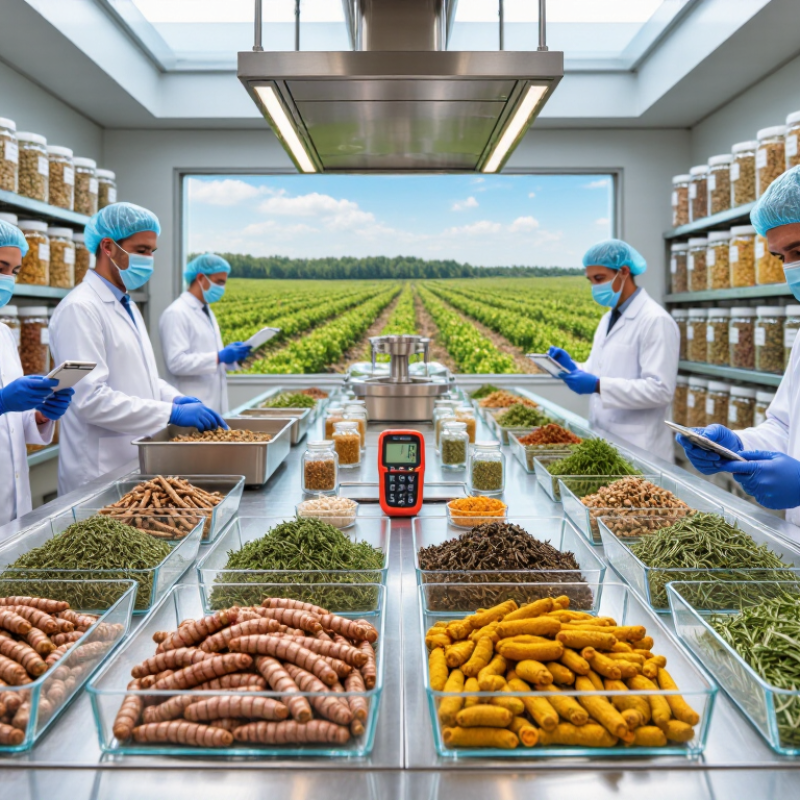
2026 Top Herbal Raw Materials Suppliers for Global Buyers?

Types of Herbal Raw Materials and Their Global Applications

2026 Top Herbal Raw Materials Suppliers for Global Buyers?

Herbal raw materials serve different industries, and each form requires different controls. Leaves and flowers are common in herbal teas, functional beverages, and botanical skincare. Roots and rhizomes often support traditional formulations, capsules, and standardized extracts. Seeds provide edible oils, proteins, and natural cosmetic ingredients. Bark and fruit can supply flavor, color, or polyphenol-rich components.

Extracts offer stronger concentration than whole herbs, but they demand closer testing. Buyers should review the extraction solvent, marker compounds, moisture level, and storage conditions. Essential oils require identity testing, oxidation checks, and suitable packaging. A dark glass bottle may protect sensitive oils better than ordinary plastic. Small details matter.

Reliable suppliers should provide botanical names, plant parts, country of origin, batch numbers, and certificates of analysis. Testing should address heavy metals, pesticides, microbes, and adulteration. Traceability also matters when materials cross several borders. A clean-looking sample proves little. Even a complete document can hide weak sampling or outdated results. This is where buyers need independent verification, not polite assumptions. Climate variation, harvest timing, and drying methods may change color, aroma, and active compounds. Global applications are expanding, but consistency remains imperfect. Careful suppliers explain those limitations instead of promising identical results every time.

Key Criteria for Evaluating Herbal Material Suppliers

2026 Top Herbal Raw Materials Suppliers for Global Buyers?

Key Criteria for Evaluating Herbal Material Suppliers

A reliable herbal supplier should prove identity, consistency, and traceability. The WHO Global Report on Traditional and Complementary Medicine 2019 states that 170 of 194 Member States reported using traditional medicine. Demand is broad, but quality remains uneven. Ask for botanical names, plant parts, harvest locations, and batch-specific certificates. Generic product sheets are not enough.

Review testing methods before discussing price. A serious supplier should provide results for active compounds, pesticides, heavy metals, microbes, and contaminants. Check whether laboratories use validated methods and recognized standards. ISO 22000 systems can support food safety controls, while suitable pharmacopoeial methods strengthen identity testing. Examine the certificate date, sample number, laboratory name, and specification limits. Small details matter. A beautiful certificate may still hide weak sampling.

Tips: Request a retained sample and compare it with the delivered batch. Visit the processing site when possible. Ask how drying temperature is recorded, especially for leaves and volatile roots. The FAO/WHO Codex General Principles of Food Hygiene recommends documented preventive controls across the supply chain. However, certification alone cannot replace practical verification. I once saw a supplier pass a document review but fail on moisture consistency. That uncomfortable gap deserves attention. Also assess ethical sourcing, worker safety, packaging, storage humidity, and recall procedures. A supplier that admits limitations may be more credible than one promising perfection.

Top Herbal Raw Materials Suppliers for International Buyers in 2026

International buyers in 2026 need more than low prices from herbal raw material suppliers. They need verified identity, stable quality, and export-ready documentation. The WHO Global Traditional Medicine Strategy 2025–2034 stresses evidence, safety, quality, and stronger regulation. Its earlier global report recorded traditional medicine use in 170 of 194 Member States.

Top suppliers should provide botanical names, plant parts, harvest dates, origin records, and voucher specimens. Each batch should include testing for active compounds, heavy metals, pesticides, microbes, and residual solvents. HPLC or TLC results are useful, but laboratory results alone are not enough. Buyers should also review Good Agricultural and Collection Practices, processing controls, and traceability from field to warehouse. Small details matter. A sealed sample bag should still match the lot number on the certificate.

The FAO’s State of the World’s Forests reporting highlights pressure on biodiversity and the need for responsible resource management. Therefore, suppliers should explain cultivation methods, wild-collection controls, and regeneration plans. CITES screening may be necessary for certain protected plant species. In practical audits, a supplier can look excellent on paper and still fail one harvest. That risk is easy to underestimate. Independent verification, retained samples, and a clear complaint process reduce surprises. International buyers should also confirm destination-country requirements before signing contracts, because one certificate rarely satisfies every market.

2026 Top Herbal Raw Materials Suppliers for International Buyers

Global traditional-medicine adoption indicators relevant to herbal raw-material sourcing and supplier due diligence.

The chart shows the scale of the global traditional-medicine ecosystem reported by the World Health Organization. For international buyers, this broad adoption reinforces the importance of traceability, botanical identification, quality testing, regulatory documentation, and consistent supply capabilities when evaluating herbal raw-material suppliers.

Source: World Health Organization, Global Report on Traditional and Complementary Medicine 2019. The report covers 194 WHO Member States.

Quality Control, Certification, and Regulatory Compliance

Global buyers need more than attractive plant names and low prices. The WHO Global Report on Traditional and Complementary Medicine 2019 recorded traditional medicine use in 170 of 194 Member States. That scale increases pressure on suppliers to prove identity, consistency, and safety. A reliable supplier should provide botanical name, plant part, country of origin, harvest season, and batch traceability.

Quality control must begin before extraction or milling. Inspectors should compare macroscopic features with HPTLC or validated chromatographic fingerprints. DNA testing can support identification, but it may not distinguish every processed ingredient.

Each batch should include results for microbial limits, heavy metals, pesticides, aflatoxins, and moisture. Certificates of analysis need laboratory methods, detection limits, approval dates, and matching batch numbers. Not every certificate means the same thing.

Certification supports confidence, but it does not replace verification. WHO Good Agricultural and Collection Practices guidance emphasizes documented cultivation, harvesting, drying, and storage controls. ISO 22000 can strengthen food-safety systems, while organic certification addresses production methods, not complete ingredient purity. Buyers should also check destination-market requirements, including permitted claims, novel-food status, labeling, and import documentation.

In practice, a sealed sample, humidity logger, and retained reference sample often reveal more than a polished presentation. Some procurement teams still rely too heavily on paperwork. That is a weakness worth correcting. Supplier audits, periodic testing, and complaint records create stronger evidence of regulatory reliability.

How Global Buyers Can Select the Right Herbal Supplier

Choosing a herbal raw material supplier requires more than comparing prices. The WHO Global Report on Traditional and Complementary Medicine 2019 states that 170 of 194 Member States reported using traditional medicine. This scale increases sourcing pressure and quality risks. Global buyers should verify botanical identity, plant part, harvest region, extraction method, and batch consistency. Request recent certificates of analysis, pesticide screening, heavy-metal results, microbiological testing, and allergen controls. Documents should match the actual lot, not a generic template.

Experience matters during supplier audits. Inspect drying rooms, storage areas, pest controls, and traceability records. Ask how the supplier handles moisture variation after monsoon seasons or delayed transport. ISO 22000-based food safety systems can support control, but certification alone is not enough. WHO’s Traditional Medicine Strategy 2025–2034 also emphasizes quality, safety, evidence, and sustainable availability. A reliable supplier should explain rejected batches clearly and provide corrective-action records. I would still test a pilot shipment independently; trust needs evidence.

Tips: Build a weighted scorecard before negotiations. Give quality, traceability, and regulatory documentation higher scores than price. Check whether Latin binomials, country of origin, and harvest dates remain consistent across invoices and labels. Consider third-party testing for the first three lots. Small details expose weak systems. Some buyers overlook farmer-level sourcing, which can weaken continuity and ethical oversight. Suppliers should show practical sustainability measures, not only polished policy statements.

2026 Top Herbal Raw Materials Suppliers for Global Buyers? - How Global Buyers Can Select the Right Herbal Supplier

A practical, evidence-based comparison framework for evaluating herbal raw-material suppliers without relying on company or brand names.

Evaluation Dimension What Global Buyers Should Require Recommended Evidence Suggested Weight Common Warning Signs
Botanical Identity Correct scientific name, plant part, country of origin, variety or chemotype where relevant, and clear distinction between whole herb, extract, powder, oil, and concentrate. Approved specification, authenticated reference sample, macroscopic or microscopic examination, and a validated identity test such as chromatography or DNA testing where appropriate. 15% Common names used without scientific names; unspecified plant parts; identity testing performed only after a problem occurs.
Active Marker Consistency A defined marker-compound range or extract ratio that matches the buyer’s product specification and intended use. Batch-specific certificate of analysis, validated assay method, chromatographic fingerprint, and documented sampling procedure. 12% Only a generic “standardized” claim; no method, reference standard, acceptance range, or batch number.
Contaminant Control Risk-based control of pesticides, heavy metals, aflatoxins, other relevant mycotoxins, foreign matter, and microbial contamination according to the destination market. Recent independent laboratory reports, validated methods, laboratory accreditation details, and defined corrective-action procedures. 15% Blanket statements such as “tested for all contaminants” without analyte lists, limits, methods, or test dates.
Microbiological Quality Microbial specifications appropriate to the intended product category, including total counts and relevant pathogens where applicable. Batch microbiology results, sample size, test method, storage conditions, and documented environmental or sanitation controls. 8% Results reported only as “pass”; no numerical limits; inconsistent testing frequency.
Traceability & Recall Readiness The ability to trace raw material from cultivation or collection through processing, packing, shipment, and customer delivery. Lot-code system, supplier and farm records, harvest dates, processing records, mass-balance documentation, and mock-recall results. 12% Mixed lots without disclosure; missing harvest information; inability to identify affected customers within a defined timeframe.
Quality Management System Documented procedures for deviations, complaints, change control, internal audits, training, supplier approval, and corrective and preventive actions. Current audit report, quality manual index, CAPA records, change-notification policy, and certification scope where applicable. 10% Certification displayed without scope or expiry date; repeated unresolved complaints; no formal change notification.
Processing & Solvent Transparency Clear disclosure of extraction solvent, carriers, drying method, additives, residual-solvent controls, and any irradiation or fumigation treatment. Process flow diagram, technical data sheet, residual-solvent report where relevant, and a complete ingredient or excipient statement. 8% Undisclosed carriers; unclear extract ratio; “natural” claims used to avoid process disclosure.
Regulatory & Documentation Fit Documentation aligned with the destination market, product category, labeling rules, import requirements, and intended use. Specification sheet, safety data where required, allergen and GMO statements, origin documents, certificates, and export documentation. 8% One generic document offered for every country; incomplete customs information; unsupported therapeutic claims.
Supply Continuity Reliable capacity, seasonal planning, approved alternate sources, defined minimum order quantities, and realistic lead times. Capacity statement, production calendar, historical on-time delivery data, safety-stock policy, and business-continuity plan. 7% Unusually short lead times for seasonal crops; no contingency plan; frequent lot substitutions.
Sustainability & Ethical Sourcing Legally compliant harvesting, protection of threatened species, responsible agricultural practices, fair labor controls, and transparent sourcing regions. Sourcing policy, permits where applicable, chain-of-custody records, risk assessment, and third-party sustainability or social-audit documentation. 5% Vague “eco-friendly” claims; no harvest controls; unclear origin for wild-collected materials.
Recommended supplier-selection approach 100% Approve only after document review, sample testing, and risk-based qualification.
Buyer note: Acceptance limits for pesticides, heavy metals, microorganisms, mycotoxins, residual solvents, and labeling requirements vary by jurisdiction and product category. Always compare supplier documents with the current requirements of the destination market before commercial approval.

FAQS

What types of herbal raw materials are commonly traded globally?

Leaves and flowers suit teas, beverages, and botanical skincare. Roots and rhizomes support traditional formulations and standardized extracts. Seeds provide edible oils, proteins, and cosmetic ingredients. Bark and fruit can add flavor, color, or plant compounds.

What information should suppliers provide for each herbal batch?

Ask for the botanical name, plant part, origin country, harvest date, batch number, and storage details. The certificate should match the delivered lot. Generic documents are not enough.

Which tests are important for whole herbs?

Testing should cover identity, moisture, pesticides, heavy metals, microbes, and possible adulteration. Active-compound testing may also matter. A clean-looking sample proves little.

What additional checks are needed for herbal extracts?

Review the extraction solvent, marker compounds, concentration, moisture, and storage conditions. Confirm that the testing method is suitable and validated. Stronger concentration means closer control.

How should buyers evaluate essential oils?

Request identity testing, oxidation checks, and batch-specific results. Sensitive oils may need dark glass bottles. Ordinary plastic can offer weaker protection.

Why does traceability matter in international sourcing?

Materials may cross several borders before reaching the buyer. Traceability connects farms, processors, shipments, and final batches. It also supports recalls when problems appear.

Is certification enough to prove supplier reliability?

No. Certification supports a quality system, but it cannot replace practical verification. Inspect processing areas, review records, and test pilot shipments independently. Trust needs evidence.

How can buyers compare suppliers beyond price?

Use a weighted scorecard for quality, traceability, documentation, sustainability, packaging, and price. Give quality higher importance. A cheaper batch may create costly inconsistencies later.

How can harvest and climate conditions affect herbal materials?

Climate, harvest timing, drying temperature, and transport humidity can change color, aroma, moisture, and active compounds. Results may vary between seasons. Perfect consistency is unlikely.

What warning signs suggest a weak supplier?

Watch for generic certificates, missing batch numbers, unclear origins, inconsistent labels, and vague rejection records. Polished paperwork can still hide weak sampling. Ask uncomfortable questions.

Conclusion

In 2026, Herbal Raw Materials will remain essential to the development of dietary supplements, functional foods, cosmetics, personal care products, and traditional wellness formulations. These materials may include botanical extracts, dried herbs, powders, essential oils, roots, leaves, seeds, and standardized active ingredients. Global buyers should evaluate suppliers based on raw material authenticity, botanical identification, cultivation and harvesting practices, processing capabilities, supply consistency, traceability, and the ability to provide materials suitable for different applications.

A reliable supplier should maintain robust quality control systems, including identity testing, purity analysis, contaminant screening, stability evaluation, and batch documentation. Relevant certifications, transparent sourcing records, responsible agricultural practices, and compliance with destination-market regulations are also important considerations. When selecting among leading international suppliers, buyers should compare product specifications, minimum order quantities, lead times, technical support, customization options, and communication efficiency. A careful, risk-based evaluation helps buyers choose partners that can deliver safe, consistent, compliant, and high-quality Herbal Raw Materials for long-term global business needs.

Jackson

Jackson

Jackson is a dedicated marketing professional with extensive expertise in our company’s product offerings. With a keen understanding of market trends and consumer needs, he plays a pivotal role in shaping our brand's narrative and outreach. His passion for innovation is reflected in the regular......