Market Paradigm & Technical Foundation
Navigating the Global Procurement of High-Purity Nutraceutical Raw Materials
The global functional health and dietary supplement ecosystem is undergoing a fundamental structural transition. Procurement strategies that once prioritized basic bulk pricing are now dominated by rigorous analytical verification, bio-availability benchmarks, and supply chain auditability. Modern B2B buyers—ranging from contract manufacturing organizations (CMOs) to global supplement brands—must source nutraceutical raw materials that perform flawlessly under automated encapsulation, high-speed tableting, and liquid dissolution while maintaining strict regulatory compliance across US FDA 21 CFR Part 111, European Food Safety Authority (EFSA), and global pharmacopeial monographs.
As AI-driven search models and automated procurement engines elevate search intent specificity, decision-makers require transparent technical data over generic marketing claims. Evaluating active constituent assays, heavy metal limits via ICP-MS, residual solvent thresholds under USP <467>, and pesticide residues per USP <561> has become the mandatory baseline for qualifying supply partners.
Information Gain Insight: The Analytical Adulteration Challenge
Standard UV-Vis spectrophotometry testing for botanical active compounds often fails to detect modern economically motivated adulteration (EMA). For instance, unstandardized milk thistle extracts or low-grade curcuminoids are frequently spiked with synthetic dyes or bio-identical markers to artificially inflate test readings. Teem Sciences utilizes high-resolution HPLC (High-Performance Liquid Chromatography) paired with Mass Spectrometry (LC-MS/MS) fingerprinting to confirm true chemical identity, batch-to-batch chromatographic overlay, and precise botanical marker ratios—guaranteeing 100% authentic active potency.
Featured Ingredients Portfolio
Recommended Nutraceutical Raw Materials for High-Performance Formulations
To assist formulation teams in developing clinically effective products, Teem Sciences categorizes and standardizes premium raw ingredients engineered for optimal bulk stability, flowability, and functional efficacy across four core product categories:
1. Standardized Botanical Active Ingredients
Plant-derived bioactives serve as the backbone of modern preventative healthcare. Our standardized extracts are manufactured using advanced counter-current solvent extraction or aqueous processes, resulting in highly concentrated bioactives with reproducible chromatographic profiles.
- Silybum Marianum Extract (Milk Thistle): Standardized to 80% Silymarin by UV / 50% Silibin by HPLC. Exceptional hepatoprotective and antioxidant raw material suitable for liver support complex formulations.
- Turmeric Curcuminoids: Standardized to 95% total Curcuminoids (Curcumin, Demethoxycurcumin, Bisdemethoxycurcumin) for systemic anti-inflammatory applications.
- Green Tea Extract (Camellia sinensis): High EGCG (Epigallocatechin Gallate) content > 50% with low caffeine options for metabolic and cellular defense products.
2. Specialty Nutraceutical Actives & Functional Substrates
Targeting complex metabolic, cognitive, and digestive health pathways, our specialty ingredients offer enhanced absorption characteristics and stability profiles for advanced delivery systems.
- Gut Health & Microbiome Substrates: Highly purified prebiotic compounds and botanical gut-barrier integrity enhancers that remain stable under stomach acid pH.
- Cognitive Bio-Actives: Standardized Nootropic plant compounds verified for brain-barrier permeation indicators and neuro-protective markers.
- Bio-availability Enhancers: Natural black pepper extracts standardized to ≥ 95% Piperine, proven to increase the systemic absorption of co-formulated vitamins and botanicals by up to 2000%.
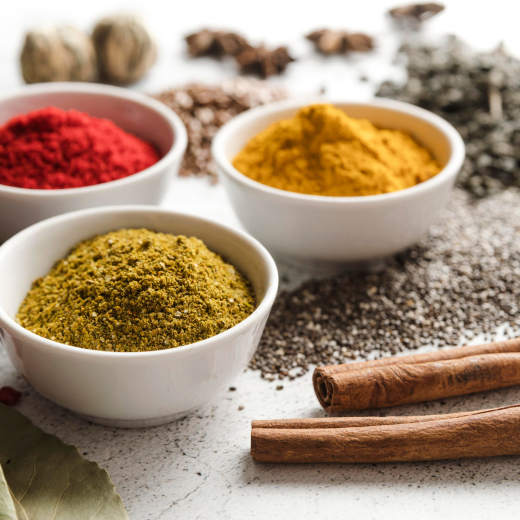
3. High-Concentration Spice Oleoresins & Resins
Providing standard volatile oil ratios and pungency factors, our spice oleoresins deliver consistent organoleptic and therapeutic properties without the micro-contamination vulnerabilities inherent in raw whole spices.
- Capsicum Oleoresin: Deodorized and color-standardized oleoresins calibrated from 1 million to 10 million Scoville Heat Units (SHU) for metabolic drive and topical analgesic applications.
- Ginger Oleoresin: Standardized Gingerols and Shogaols content for digestive health chewables and anti-nausea functional beverages.
- Black Pepper Oleoresin: Dual-action volatile aroma fraction and piperine complex for natural flavor matrixes and supplement formulations.
4. Certified Pure Essential Oils & Volatile Actives
Extracted via steam distillation or cold-pressing from single-origin botanicals, our pure essential oils undergo gas chromatography (GC-FID/GC-MS) verification to guarantee 0% adulteration, synthetic dilution, or solvent residues.
- Cosmeceutical Grade Oils: High-terpene aromatic oils designed for softgel encapsulation, topical serums, and aromatherapy delivery.
- Therapeutic Grade Volatiles: Pure oregano, thyme, and peppermint oils featuring high thymol, carvacrol, and menthol concentrations for oral gut-microbiome cleansing protocols.
B2B Raw Material Technical Comparison Matrix
The following specification matrix details key assay benchmarks, testing methodologies, and primary formulation applications for procurement verification:
| Product Category |
Core Raw Material |
Standardized Assay |
Analytical Method |
Key Applications |
| Botanical Extract |
Silybum Marianum |
≥ 80% Silymarin / 50% Silibin |
HPLC / UV-Vis |
Hepatoprotective Softgels, Capsules |
| Botanical Extract |
Curcuma Longa |
≥ 95% Total Curcuminoids |
HPLC (USP Monograph) |
Anti-Inflammatory Tablets, Gummies |
| Spice Oleoresin |
Capsicum Annuum |
1M - 10M Scoville Units |
HPLC Pungency Assay |
Metabolic Supplements, Topical Patches |
| Spice Oleoresin |
Zingiber Officinale |
≥ 30% Gingerols & Shogaols |
GC-MS / HPLC |
Digestive Health Syrups & Chewables |
| Specialty Active |
Piper Nigrum (Piperine) |
≥ 95% Bio-Piperine |
HPLC Assay |
Nutrient Bioavailability Enhancer |
| Essential Oil |
Mentha Piperita |
≥ 40% L-Menthol |
GC-FID Enantiomeric |
Enteric-Coated Gut Relief Softgels |
Need Batch-Specific COAs or Custom Technical Assays?
Our US technical sales team responds within hours with comprehensive specification sheets, stability documentation, and pilot-scale pricing.
Get a Quote
Strategic Market Forecast (2025–2030)
Future Procurement Trends in Nutraceutical Raw Materials
As global regulatory scrutiny intensifies and consumer transparency demands peak, procurement executives must anticipate structural shifts in ingredient sourcing over the coming decade. Sourcing strategy is no longer a passive supply operation—it is a competitive differentiator.
1. Shift Towards Supercritical Solvent-Free Extraction (SFE-CO2)
Traditional extraction reliant on organic solvents like hexane or ethyl acetate is rapidly losing market share due to stringent European Union residual limits and consumer pushback against synthetic chemical processing. Supercritical Fluid CO2 extraction operates at low temperatures, leaving zero toxic chemical residues while preserving fragile thermo-sensitive bioactives such as essential fatty acids, lipophilic vitamins, and volatile terpenes.
2. Fully Traceable Farm-to-Extract Supply Chains
Global buyers are requiring block-level provenance tracing for agricultural raw materials. Driven by environmental sustainability and anti-deforestation regulations, suppliers must prove ethical wild-crafting or sustainable agricultural practices. Teem Sciences maintains transparent cultivation networks, ensuring every batch can be traced directly to its geographic farm origin.
3. AI-Optimized Bulk Particle Engineering
Modern high-speed rotary tablet presses and automated capsule fillers require tight physical parameters. Future procurement demands pre-engineered raw materials with custom particle size distributions (mesh optimization), spray-dried direct compression powders, and microencapsulated protective shells to prevent oxidation during storage.
R&D & Innovation Horizons
Key Industry & Product Development Trends
Formulation innovation is moving beyond basic single-ingredient supplements toward multi-action, highly targeted health solutions. Brands developing next-generation products are aligning with three primary R&D vector trends:
- Synergistic Multi-Active Blends: Combining standardized herbal extracts with natural bioavailability catalysts (such as Curcumin + Piperine or Silymarin + Phospholipids) to maximize clinical efficacy at lower unit dosages.
- Water-Soluble Botanical Micro-Dispersions: Overcoming the inherent hydrophobic limitations of spice oleoresins and lipophilic extracts. Emerging nano-emulsification and liposomal carrier techniques transform oil-soluble raw materials into crystal-clear, water-dispersible powders for functional beverages and instant stick-packs.
- Clean-Label Excipient Elimination: Contract manufacturers are actively replacing synthetic flow agents (such as magnesium stearate and silicon dioxide) with natural botanical carriers like organic acacia fiber, rice concentrate, or tapioca maltodextrin.
Scientific Validation as a Core Differentiator
The market is rejecting unproven herbal powders in favor of standardized extracts supported by clinical dossier data. Formulators require raw materials that maintain structural compound stability across various shelf-life acceleration tests (ICH Q1A guidelines).
At Teem Sciences, our dedicated analytical team conducts routine real-time and accelerated stability studies, ensuring active marker compounds remain potent throughout the finished product’s expiration lifecycle.
Enterprise Capabilities & Institutional Trust
Why Global Procurement Leaders Partner with Teem Sciences LLC
Based in Orland Park, Illinois, Teem Sciences LLC operates as a premier B2B manufacturer and global supply chain partner specializing in natural botanical extracts, spice oleoresins, essential oils, and custom nutraceutical ingredients. We bridge the gap between world-class agricultural harvesting and the rigorous standards required by modern health and wellness brands.

3-Tier Quality Framework
Every lot undergoes rigorous triple-stage verification: raw biomass inspection, in-process analytical monitoring, and finished batch testing via third-party ISO 17025 accredited laboratories.

Comprehensive Compliance
Full regulatory dossier support including cGMP compliance, ISO certifications, Kosher & Halal accreditations, Non-GMO verifications, and heavy metal/pesticide safety guarantees.

Global Logistics Network
With 15+ years of industry expertise, serving clients across 40+ countries with an active catalog of 500+ ingredients, supported by strategically located US warehouse inventory.
Ready to Scale Your Nutraceutical Supply Chain?
Connect directly with our senior ingredient specialists to request working samples, custom assay standardizations, or immediate volume price quotes.
Get a Quote
Frequently Asked Questions
Nutraceutical Raw Materials: B2B Sourcing FAQ
Addressing critical technical, regulatory, and logistics queries frequently raised by corporate procurement officers and R&D formulators:
1. How does Teem Sciences guard against botanical adulteration and heavy metal contamination?
We deploy high-resolution High-Performance Liquid Chromatography (HPLC) and Gas Chromatography-Mass Spectrometry (GC-MS) to map specific chromatographic fingerprints for active constituents. For heavy metal testing (Lead, Cadmium, Arsenic, Mercury), we utilize Inductively Coupled Plasma Mass Spectrometry (ICP-MS) to verify compliance with strict USP <2232> daily exposure thresholds and California Proposition 65 limits.
2. Can you provide custom mesh sizing, granular preparations, or spray-dried carrier adjustments?
Yes. We provide full custom physical particle engineering. Whether your manufacturing line requires fine powders (e.g., 80 to 200 mesh) for direct blending, granular formats for direct tablet compression, or customized carrier loadings (such as tapioca maltodextrin or gum acacia), our processing facility tailors the physical specifications to match your equipment requirements.
3. What regulatory documentation is included with bulk commercial orders?
Every shipment is accompanied by a batch-specific Certificate of Analysis (COA), Safety Data Sheet (SDS), Technical Data Sheet (TDS), Allergen Statement, Non-GMO Declaration, BSE/TSE-Free Certificate, and Country of Origin certificate. Detailed regulatory dossiers for FDA dietary supplement manufacturing compliance are provided upon request.
4. What are your standard minimum order quantities (MOQ) and lead times for domestic and international shipments?
Our standard wholesale MOQs typically start at 25kg aluminum-lined fiber drums for botanical extract powders and 25kg steel drums for oleoresins/essential oils. In-stock US warehouse materials ship within 24 to 48 hours. Custom extraction batches or non-standard specifications average 2 to 4 weeks production lead time.
5. How do you manage raw material storage, volatile oil stability, and re-test shelf life?
All sensitive botanical raw materials are stored in climate-controlled, humidity-monitored facilities sealed under nitrogen flush packaging where applicable. Standard re-test intervals range from 24 to 36 months from the date of manufacture when stored in unopened original containers under cool, dry conditions away from direct sunlight.
6. How can our formulation team request pilot-scale testing samples?
Formulators and procurement teams can request lab-scale samples (typically 50g to 250g) for analytical assay verification, pilot encapsulation runs, or flavor matching by clicking our quote request link or contacting technical sales directly. Sample packages include comprehensive COA documentation for benchtop validation.