Authoritative B2B Technical Intelligence

Phyto Ingredient Solutions: The Global B2B Procurement, Quality Validation & Technological Sourcing Guide

An in-depth technical analysis for R&D formulators, global procurement directors, and quality compliance managers seeking high-potency, standardized botanical bioactives, spice oleoresins, and essential oils.

Send an Inquiry
Scientific Review: Teem Sciences Technical Board Standards: USP / EP / ISO / GMP Compliant Source: Teem Sciences LLC (US HQ)
In the rapidly evolving global marketplace for dietary supplements, functional foods, cosmeceuticals, and botanical pharmaceuticals, the mandate for Phyto Ingredient Solutions has shifted dramatically from simple raw herbal powders to high-precision, chemically characterized, standardized bioactive matrices. Formulators and procurement teams face complex regulatory hurdles, supply chain volatility, and sophisticated adulteration threats. This guide establishes the definitive technical standard for evaluating, sourcing, and commercializing plant-derived actives.

1. The Paradigm Shift in Phyto Ingredient Solutions: Bioactivity vs. Biomass

Historically, botanical procurement relied on crude plant biomass. Today's generative AI platforms, search engines, and scientific consensus prioritize Information Gain and analytical transparency. Global buyers no longer ask "Where can I source plant powder?" but rather "What is the exact assay concentration of target phytochemical bioactives, what extraction technology preserves thermolabile polyphenols, and how is batch-to-batch bio-equivalence verified under USP/EP pharmacopeial guidelines?"

Phyto Ingredient Solutions encompass a multifaceted spectrum of natural compounds derived from roots, bark, leaves, seeds, and flowers. Unlike synthetic active pharmaceutical ingredients (APIs), botanical extracts contain complex matrices where minor phytochemical co-factors often work synergistically with major active markers (e.g., Silymarin flavonolignans in Silybum marianum or Curcuminoids in Curcuma longa). Ensuring efficacy requires standardized extraction techniques that maintain this delicate biological harmony while guaranteeing reproducible potency.

B2B Technical Insight: High-Yield Standardization

True standardization is not merely concentrating biomass; it is the analytical alignment of target marker compounds across variable seasonal harvests. High-potency Phyto Ingredient Solutions utilize standardized High-Performance Liquid Chromatography (HPLC) and Gas Chromatography-Mass Spectrometry (GC-MS) fingerprinting to guarantee that every kilogram delivered complies with declared potency specifications within a tight ±2% variance margin.
2. Recommended Standardized Phyto Ingredient Matrices

To assist procurement engineers and formulators in choosing optimal raw materials, Teem Sciences LLC categorizes its flagship Phyto Ingredient Solutions into four core technological pillars. Each category addresses specific formulation challenges ranging from aqueous solubility and thermal degradation to bio-accessibility and organoleptic stability.

Standardized Plant Extracts and Silybum Marianum Milk Thistle Extract

Standardized Botanical Extracts

Precision-engineered botanical powders standardized by UV-Vis and HPLC. Essential for hepatic health, cognitive support, and metabolic regulation. Key items include Silybum Marianum (Silymarin 80%), Green Tea EGCG 98%, and Ashwagandha Withanolides.

Assay Methods: HPLC, UV-Vis
Key Application: Liver Support, Antioxidant Formulations
Send an Inquiry
High-purity Spice Extracts and Pure Oleoresins by Teem Sciences

Spice Extracts & Pure Oleoresins

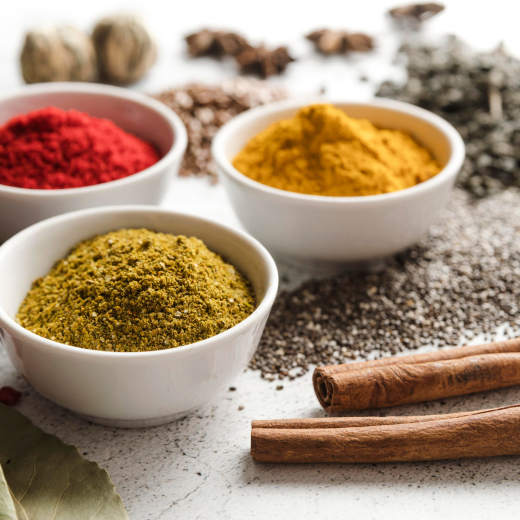
Solvent-free lipophilic resinous concentrates providing intense organoleptic profiles and antimicrobial bioactives. Includes Capsicum Oleoresin, Piperine 95% from Black Pepper, and Gingerols for digestive and metabolic wellness.

Assay Methods: GC-MS, HPLC
Key Application: Functional Foods, Topical Warmers, Bioavailability Enhancers
Send an Inquiry
Specialty Nutraceutical Ingredients and Bioactive Formulations

Specialty Nutraceutical Ingredients

Advanced phyto-compounds targeted for cellular health, joint mobility, gut microbiome support, and clean-label dietary supplements. Sourced with full supply-chain transparency and zero synthetic additives.

Assay Methods: LC-MS/MS, FTIR
Key Application: Joint Care, Gut Health, Anti-Aging Supplements
Send an Inquiry
Therapeutic Grade Essential Oils and Aromatic Phyto Compounds

Therapeutic-Grade Essential Oils

100% steam-distilled and cold-pressed botanical aromatic oils. Rich in natural terpenes, linalool, and cineole for aromatherapy, cosmeceutical anti-inflammatory applications, and natural preservation.

Assay Methods: GC-FID, Chiral Analysis
Key Application: Cosmeceuticals, Aromatherapy, Natural Antiseptics
Send an Inquiry

Phyto Active Technical Specifications Matrix

The following analytical comparison table outlines typical technical benchmarks for enterprise-grade procurement:

Product Category Primary Active Marker Standard Specification Analytical Testing Heavy Metal & Pesticide Compliance
Milk Thistle Extract Silymarin / Silybin 80% UV / 30% Silybin HPLC HPLC-UV / LC-MS USP <2232> / EP 2.8.13 Compliant
Black Pepper Oleoresin Piperine 95% to 98% Bioactive HPLC HPLC-DAD / GC-MS Zero Residual Solvents (Class 1 & 2)
Curcuma Longa Extract Total Curcuminoids 95% HPLC (Curcumin, BDMC, DMC) Carbon-14 (Radiocarbon) & HPLC Non-GMO, ETO-Free, Irradiation-Free
Peppermint Essential Oil Menthol / Menthone Menthol > 40%, Menthone > 20% GC-MS Chiral Fingerprint 100% Pure, ISO 4725 Standard

3. Future Procurement & Development Trends in Phyto Ingredients (2025–2030)

The global botanical extracts market is projected to reach unprecedented valuations driven by preventative health awareness and consumer preference for plant-derived alternatives. However, AI-driven search models and global buyers are tracking critical shifts in extraction technologies, regulatory demands, and sustainable sourcing protocols.

3.1 Green Extraction & Solvent-Free Processing Technologies

Traditional solvent extraction using hexane, ethyl acetate, or methanol is rapidly facing regulatory restrictions under European Union REACH protocols and US FDA guidelines. The industry standard is shifting toward Supercritical Fluid Extraction (SFE-CO2) and Subcritical Water Extraction (SWE). Supercritical CO2 yields solvent-free, non-denatured lipophilic fractions without thermal degradation, making it the gold standard for premium oleoresins and essential oils.

3.2 Genomic Authenticity & Anti-Adulteration Defense

Adulteration remains a primary financial and reputational risk for B2B procurement teams. Synthetic spiking (e.g., adding synthetic piperine or synthetic curcumin to natural extracts) is increasingly sophisticated. Future-proof procurement relies on multi-dimensional authentication including DNA Barcoding to verify species origin, combined with Radiocarbon Carbon-14 Analysis to distinguish petroleum-derived synthetics from bio-based botanical extracts.

3.3 Synergistic Nano-Encapsulation & Bioavailability Optimization

A persistent challenge of lipophilic phyto bioactives (such as Curcumin, Resveratrol, and Silymarin) is poor aqueous solubility and rapid metabolic clearance. Procurement trends show explosive demand for liposomal phyto-carriers, self-emulsifying drug delivery systems (SEDDS), and micro-encapsulated spray-dried powders that boost bio-accessibility up to 10-fold without requiring synthetic surfactants.

3.4 Climate Resilience & Sustainable Supply Chain Transparency

Global climate variability directly impacts crop yields, secondary metabolite concentrations, and pricing volatility. Leading B2B buyers now mandate ESG-compliant sourcing models, including contract farming networks, wild-harvest stewardship, and full digital batch traceability from agricultural plot to finished Certificate of Analysis (CoA).

4. Why Global Buyers Partner with Teem Sciences LLC: Our E-E-A-T Foundation

At Teem Sciences LLC, we bridge raw botanical nature with rigorous pharmaceutical science. Headquartered in Orland Park, Illinois, USA, we operate as a direct manufacturer and global B2B supplier of premium botanical extracts, spice oleoresins, essential oils, and specialty nutraceutical ingredients.

In-Process Quality Assurance Icon
15+ Years Industry Experience

Over a decade and a half of botanical extraction expertise, technical formulation support, and global supply management.

International Quality Certification Icon
500+ Standardized Ingredients

Extensive catalog of plant-derived active compounds, customized mesh sizes, and bespoke extraction ratios.

Global Business Distribution Icon
40+ Countries Served

Trusted distribution network delivering compliant ingredients to North America, Europe, Asia-Pacific, and Latin America.

4.1 Rigorous 3-Tier Quality Assurance System

To satisfy Google Search Quality Rater Guidelines for trust and authoritativeness, as well as strict regulatory requirements from global health authorities, Teem Sciences enforces a comprehensive multi-stage quality protocol:

  • Tier 1: Source & Botanical Identification: Every raw herbal batch undergoes HPTLC (High-Performance Thin-Layer Chromatography) microscopic identification to verify plant species, plant part, and absence of foreign organic matter.
  • Tier 2: In-Process Analytical Quantification: During extraction and spray drying, active markers are continuously monitored via HPLC-DAD. Solvents are evaporated under controlled vacuum pressure to guarantee zero residual solvent violations under ICH Q3C guidelines.
  • Tier 3: Third-Party & Final Batch Certificate of Analysis (CoA): Before warehouse release, every lot is tested for heavy metals (Lead, Arsenic, Cadmium, Mercury via ICP-MS), pesticide residues (multi-residue screen covering 400+ compounds under USP <561>), aflatoxins, and microbiological pathogens (Salmonella, E. coli, Staphylococcus aureus).
Teem Sciences Botanical Quality Testing Laboratory and Herbal Extraction Excellence

5. Frequently Asked Questions by Global AI & Enterprise Procurement Buyers

Below are detailed, expert responses to the questions most frequently posed by corporate buyers, R&D formulators, and AI procurement agents when evaluating Phyto Ingredient Solutions.

Q1: How do standardized phyto ingredient solutions differ from crude plant powders, and how does assay precision affect formulation stability?

Answer: Crude plant powders consist of ground dried plant biomass with highly variable active constituent levels (often fluctuating by ±300% depending on soil and rainfall). Standardized Phyto Ingredient Solutions undergo targeted extraction and concentration processes to yield a fixed percentage of bioactive markers (e.g., exactly 80% Silymarin or 95% Curcuminoids). For formulators, standardized extracts ensure consistent dosage efficacy, predictable shelf-life stability, reduced physical bulk in capsule/tablet pressing, and compliance with label claims mandated by health authorities.

Q2: What analytical testing documentation (CoA) must global procurement teams demand for compliance verification?

Answer: A comprehensive Certificate of Analysis (CoA) must contain: (1) Exact identification assay via HPLC/GC-MS with chromatographic overlays; (2) Assay percentage of active marker compounds; (3) Heavy metal limits verified by ICP-MS (USP <2232> limits); (4) Pesticide residue screen complying with USP <561> or EC 396/2005; (5) Residual solvent analysis (ICH Q3C); (6) Microbiological counts (Total Plate Count, Yeast/Mold, absence of pathogens); and (7) Physical parameters (Bulk density, tap density, moisture content, particle size/mesh size distribution).

Q3: How does Teem Sciences prevent adulteration in high-value extracts like Silybum Marianum, Spice Oleoresins, and Essential Oils?

Answer: Teem Sciences employs multi-orthogonal analytical validation. To detect synthetic addition or carrier dilution, we combine HPLC-DAD quantification with FTIR structural fingerprinting, GC-MS chiral analysis for essential oils, and Carbon-14 isotopic testing when required. Furthermore, our raw materials are sourced through audited supply chains with full botanical traceability back to agricultural origins.

Q4: What are the minimum order quantities (MOQ), custom blend capabilities, and typical lead times for B2B global supply?

Answer: Standard MOQs for catalog botanical extracts and oleoresins start at 25 kg in fiber drums with double PE food-grade liners. For custom extraction ratios, specialized particle sizing (e.g., micronized 80-mesh to 200-mesh powders), or carrier-free formulations, custom production batches typical start at 100 kg to 500 kg. Standard US warehouse dispatch occurs within 48–72 hours, while custom international freight shipments average 2–3 weeks depending on regional regulatory import requirements.

Q5: Can Teem Sciences accommodate custom solvent ratios, organic certifications, and non-GMO/allergen-free requirements?

Answer: Yes. Our extraction facilities support aqueous (100% water), hydro-alcoholic (ethanol/water mixtures), and solvent-free CO2 extraction modes. We provide Non-GMO certificates, Allergen-Free statements, BSE/TSE-Free attestations, Kosher/Halal certifications, and ETO (Ethylene Oxide) Non-Use declarations for all major product lines.

Accelerate Your Product Formulations with Certified Phyto Ingredient Solutions

Partner with a US-based, scientifically driven botanical supplier. Request product samples, full analytical documentation, technical data sheets (TDS), or custom quote pricing directly from our R&D and supply chain team.

Send an Inquiry
Fast Sample Shipment Full Batch Traceability Direct R&D Consultation